The agency problem, in its purest form
An agency does not get to choose how its clients talk to it. Hozho Studio runs social, performance and branding for six brands, and before BugSmash every one of those relationships had its own improvised feedback channel. WhatsApp for some. Email for others. For one client, a Google Sheet.
None of that is unusual. It is what happens when the client is not going to adopt your tooling and you are not going to ask them to.
The problem
Feedback arrived scattered across WhatsApp and email, detached from the thing it was about. Someone would describe a change in a message and the team would have to work out which post, which frame, which part of the page they meant.
That step has a name inside the agency: decoding. Before anyone could make a change they had to reconstruct the client's intent from a text message, and get it wrong at their own cost.
The Google Sheet was the worst version of it, and it was for the client they knew best. Three years of managing that brand's social, and the feedback still came as rows in a spreadsheet that Hozho maintained themselves, describing changes to assets the sheet could not show.
The brand used to share the feedback on a Google Sheet which we used to maintain and it was too tough to decode their changes.
What changed
There was no procurement process and no trial negotiation. They searched Google for a review tool, found BugSmash was free with no credit card, and signed in. Setup was, in Khwab's word, absolutely smooth.
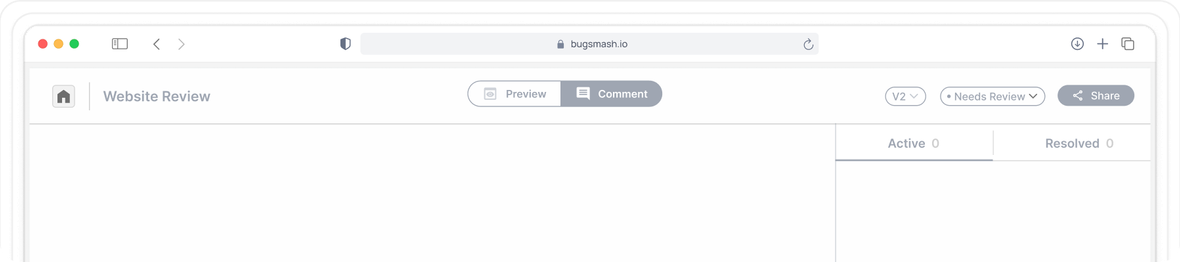
The mechanic that mattered is the simplest one in the product:
What changed
For the three year client, the change was subtractive. They deleted the spreadsheet, moved the assets into BugSmash, and the decoding step went with it.
The result
The saving Khwab points to is one to two hours that used to go into decoding feedback out of WhatsApp messages and email. Not the work, not the revisions. Just the part where you establish what the client actually meant.
The spreadsheet is gone. Six brands and eight people now run through the same place, and the client side of that costs nothing to set up because there is no client side to set up.
Asked whether it changed the business in a bigger way, his answer was about stress rather than revenue, which is the honest answer most agency founders would give.
BugSmash has the potential to completely change how teams approach their clients asking for feedback.
Who he would tell
Agencies, without qualification. In his words, be it web, social or performance. The shape of the problem does not change with the discipline: the client is not going to learn your tool, and the feedback still has to land somewhere you can act on.
What stood out to us about BugSmash is how clearly it solves a real problem. The client feedback problem.
Case study prepared with Khwab Purswani, Founder of Hozho Studio. Published with his permission.