The work
Conan is a freelance studio of one, with ongoing monthly clients and a project range that would break most single purpose tools: online stores, mobile apps, websites, branding, software UI, PDFs, and 140 page graphics heavy books. He brings his own tools to every engagement and runs several projects at once across four ultra wide screens.
When he is not on client work he is building his own products and apps, which means he is on both sides of the review: the person collecting feedback and the person who has to act on it.
The problem
Feedback lived everywhere. Emails, texts, Zoom calls, phone calls, and plenty of scribbled notes in a notebook. He was constantly trying to remember who said what, which version they meant, and where that one tiny change was supposed to go.
Once a few people joined a review it became chaos, and the chaos had a specific shape: feedback scattered across five different places, with half the battle being to work out which comment applied to which version. Comments sent through one channel got missed entirely, which meant rework and delays. In his words it started to feel like detective work.
He went looking. Roughly ten different tools, none of which handled everything he needed.
I was starting to think I was destined to live in perpetual feedback purgatory.
What changed
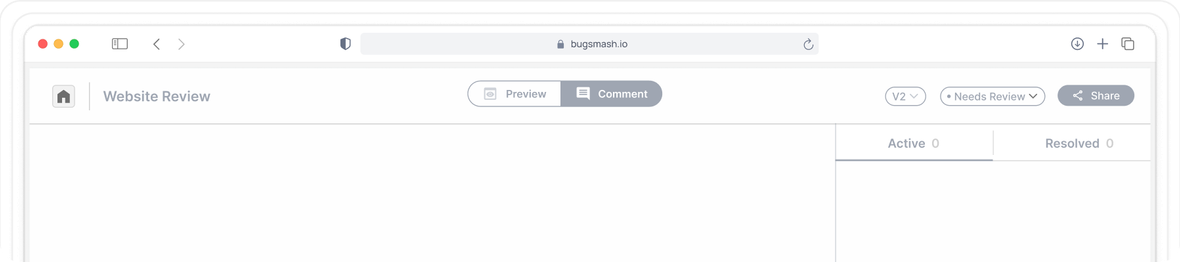
He found BugSmash through an organic Reddit thread rather than an ad. It felt intuitive from the start, and in his description it had everything he was looking for plus a few things he had not realised he needed.
What made it stick across a client roster this varied:
What changed
That last one changed the working relationship in a way he did not expect. Clients now ask him for the link.
Can you send me a BugSmash link?" is now a normal part of the workflow.
He is also his own client
This is the part that separates Conan from most people who buy a review tool. He does not only collect feedback with it, he leaves feedback for himself.
While testing his own websites and apps he logs bugs, ideas and changes as he finds them, in the same place his client work lives. By the time he sits down for his next coding session the list is already written and in context. The mobile app extends that to wherever he happens to be, including late night design reviews from bed.
It replaced a habit a lot of people will recognise: screenshot the problem, annotate it, file it somewhere, hope you find it again.
The result
Conan puts it at 3 to 5 hours saved every week , 2 to 3 fewer revision rounds on a typical project, and sign-off arriving 25 to 30% faster .
There is a structural change underneath those numbers. Feedback now has one route, and he holds that line: everything goes through BugSmash, which is what stops comments going missing and work being redone. The paper trail does quiet work too. When a client does not remember asking for something, or remembers asking for something they did not, the thread settles it without anybody having to be right.
He describes it as the most used software investment among 50 to 60 tools he has bought.
At this point, BugSmash isn't really part of the workflow. BugSmash IS the workflow.
What it actually bought him
Asked whether it changed the business, Conan went straight past the billing question to the thing underneath it. Hours saved chasing feedback are hours available for the work he wanted to do in the first place, or for something entirely outside the studio.
The best tools don't just save clicks, they give you time back. BugSmash has genuinely given me more time to create and less time chasing feedback.
Who he would tell
He already does, and the list is deliberately broad: big teams working internally, freelancers, vibe coders who want a focused coding session, photographers, videographers, 3D artists. His test is simple. If your work involves feedback, revisions or approvals, this probably helps.
He also credits the pace of the product itself. Suggestions turning into shipped improvements within days is why his workflow has kept growing alongside it rather than settling into one habit and stopping there.
I've tried a lot of tools. BugSmash is one of the rare ones that became so integrated into how I work that I genuinely don't want to work without it.
Case study prepared with Conan of CONANrocks. Published with his permission.